What Is a Crypto Banking Solution in India?

Updated: Jan 3
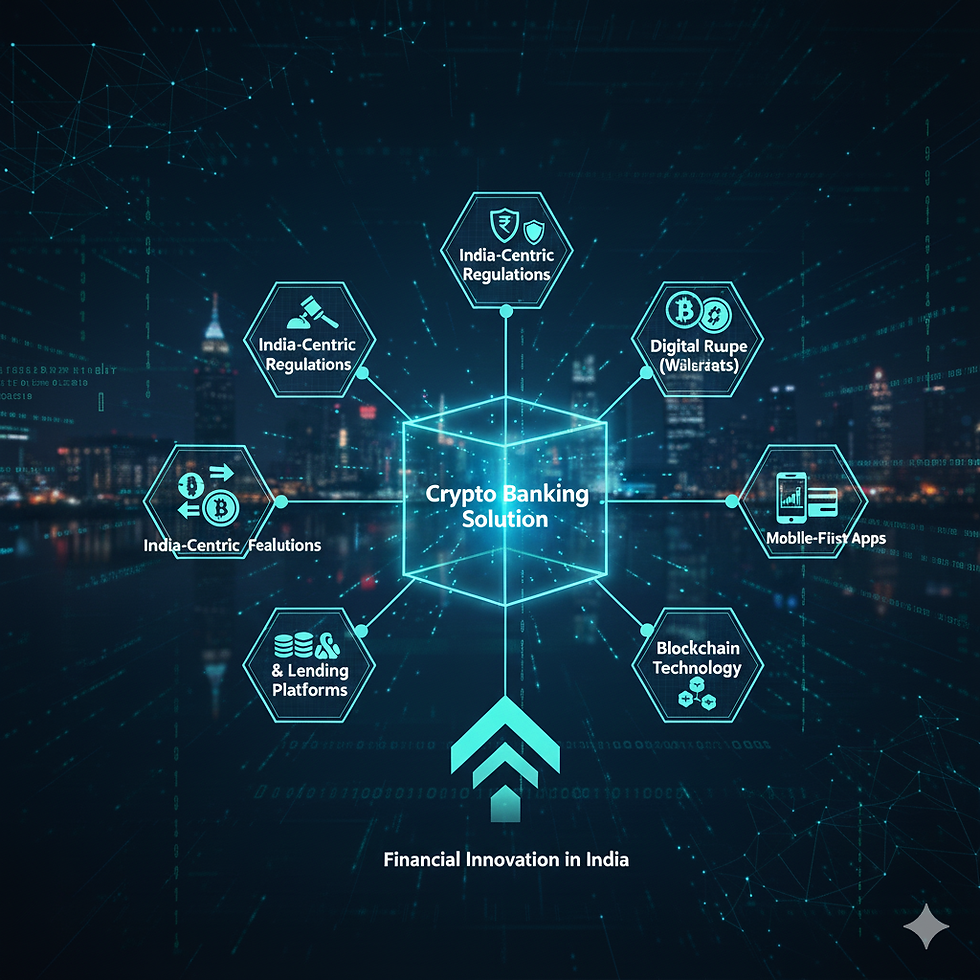
Crypto adoption in India has moved beyond trading apps and exchanges. Today, fintech startups, enterprises, and global platforms are exploring ways to combine traditional banking services with crypto and blockchain infrastructure. This convergence is giving rise to what’s commonly called a crypto banking solution India.
But what does that actually mean in the Indian context—where regulations, compliance, and banking partnerships matter just as much as technology?
In this guide, we break down what a crypto banking solution is, how it works in India, the technologies involved, and how fintech companies can build compliant, scalable crypto-enabled banking platforms.
What Is a Crypto Banking Solution in India?
A crypto banking solution India is a digital financial platform that combines banking-like services (accounts, payments, wallets, cards, compliance workflows) with cryptocurrency and blockchain capabilities.
These platforms typically allow users to:
Hold and manage crypto assets
Convert crypto to fiat (and vice versa)
Make crypto or fiat payments
Access wallets, cards, and transaction history
Use compliant KYC and AML workflows
Unlike traditional banks, crypto banking platforms rely on blockchain infrastructure, but unlike pure crypto wallets, they are built with bank-grade security and compliance.
Why Crypto Banking Is Gaining Momentum in India
India’s crypto ecosystem is evolving quickly, driven by:
High crypto adoption among retail users
Growing interest from global Web3 companies
Demand for regulated, user-friendly crypto products
Expansion of cross-border and digital payments
Rise of fintech innovation in India
As a result, many fintechs are now building crypto banking platform India solutions that feel familiar to users—but are powered by blockchain under the hood.
How Crypto Banking Solutions Work
A typical crypto banking platform is made up of multiple layers:
Banking & Account Layer
Digital accounts or wallets
Transaction history and balances
Integration with fiat rails
Crypto & Blockchain Layer
Wallet infrastructure
Blockchain node or provider integration
Crypto custody or non-custodial models
Payments Layer
Crypto payments
Fiat payments
Card issuance or payment gateways
Compliance Layer
KYC & AML workflows
Transaction monitoring
Audit logs and reporting
This architecture allows crypto banking platforms to offer services similar to digital banking solutions India, while supporting crypto assets securely.
Key Features of a Crypto Banking Solution
A modern crypto banking solution typically includes:
Multi-currency wallets (crypto + fiat)
On-ramp and off-ramp support
Secure custody or self-custody options
Crypto cards or payment integrations
Real-time transaction tracking
Advanced security and encryption
Compliance and reporting dashboards
These features are essential for building a production-ready cryptocurrency banking app.
Regulatory Considerations in India
This is where many crypto projects struggle.
While crypto is not illegal in India, platforms must carefully navigate:
KYC and AML regulations
Tax reporting obligations
Data protection and security norms
Banking partner requirements
Restrictions on crypto payments
A compliant crypto banking solution India is built with regulation-first architecture, ensuring flexibility as policies evolve.
Technology Stack Behind Crypto Banking Solutions
Frontend
Web & mobile apps
Secure user dashboards
Wallet and transaction UI
Backend
API-driven architecture
Ledger and transaction services
Integration with banking and blockchain APIs
Blockchain
Ethereum, Polygon, or other networks
Wallet and smart contract integrations
Security
Encryption and key management
Secure access controls
Monitoring and alerts
This stack enables scalable blockchain banking solutions tailored for India.
Challenges in Building Crypto Banking Solutions
Regulatory uncertainty
Banking partner onboarding
Security and custody risks
User education and trust
Scalability under transaction load
These challenges highlight the importance of working with an experienced fintech development partner.
Final Thoughts
A crypto banking solution India represents the next evolution of digital finance—bringing together the trust of banking with the innovation of blockchain.
For fintechs and enterprises, success depends on regulatory awareness, secure architecture, and scalable design. With the right technology partner, crypto banking can move from experimentation to a sustainable, compliant financial product.
FAQ
1. What exactly is a crypto banking solution in India?
A crypto banking solution in India is a platform that combines traditional banking-style features—like accounts, payments, and compliance—with crypto and blockchain capabilities. It allows users to manage crypto assets alongside fiat money in a secure, user-friendly, and regulated environment.
2. Is crypto banking legal in India?
Crypto banking itself isn’t illegal, but it operates in a regulated and evolving landscape. Platforms must follow strict KYC, AML, tax reporting, and banking partner requirements. Successful crypto banking solutions in India are built with compliance-first architecture to adapt as regulations change.
3. How is a crypto banking solution different from a crypto exchange or wallet?
A crypto exchange focuses mainly on buying and selling crypto, while a wallet stores assets. A crypto banking solution goes further—it offers banking-like features such as payments, fiat integration, cards, compliance workflows, and a smoother experience similar to digital banking apps.
4. Who should consider building a crypto banking solution in India?
Crypto banking solutions are ideal for fintech startups, Web3 companies, payment platforms, and global crypto businesses entering the Indian market. They’re especially useful for companies offering crypto payments, cross-border transactions, or regulated crypto-financial services.
5. What are the biggest challenges in building a crypto banking solution in India?
The main challenges include regulatory uncertainty, finding banking partners, ensuring strong security, managing custody risks, and building user trust. Working with an experienced fintech development partner helps navigate these challenges and build a scalable, compliant platform.


