Fintech Companies in UAE: Custom Software Development

Updated: Apr 14

The UAE has become one of the most active fintech markets in the region, and that is not happening by accident. The country has built a strong environment for financial innovation through hubs like DIFC and ADGM, supportive digital transformation efforts, and a business ecosystem designed to attract financial and technology firms. DIFC says it is the leading financial hub in the MEASA region, while ADGM describes the UAE as a leading centre for innovation in finance.
For founders and product teams, this creates both an opportunity and a challenge. The opportunity is clear: more users are ready for digital financial products, and the market is open to innovation. The challenge is that expectations are now much higher. Users want smooth onboarding, secure payments, fast account access, smart support, and reliable app experiences. That is exactly why custom software development has become so important for Fintech Companies in UAE.
Understanding the Fintech Companies in UAE Landscape
The UAE stands out because it combines financial ambition with practical infrastructure. Dubai and Abu Dhabi both offer strong fintech positioning, and official platforms highlight the country’s free zones, investment support, and digital-growth focus. DIFC’s Innovation Hub has been expanding rapidly, and DIFC reported that FinTech and Innovation firms grew from 811 to 1,081 in H1 2024, then to 1,388 in H1 2025. That kind of momentum shows why the UAE fintech ecosystem is getting more competitive and more sophisticated.
This growth is also changing how products get built. In the early stage, many businesses can launch with a patchwork of tools. But once they need stronger workflows, deeper integrations, better security, or a differentiated customer experience, off-the-shelf systems start showing their limits. That is why many fintech startups UAE businesses eventually move toward custom platforms that better match their actual product vision.
What Custom Software Development Means for Fintech Companies
Custom software development means building a platform, app, or internal system tailored to the business's exact needs rather than forcing the business to adapt to a generic product. In fintech, that matters more than in many other industries because financial workflows are rarely simple. A company may need KYC, transaction monitoring, reconciliation, lending logic, portfolio reporting, admin controls, bank integrations, and audit trails all working together in one system.
That is where custom development creates real value. It gives product teams more control over the user journey, helps operations teams work more efficiently, and makes future expansion easier. For many financial technology companies UAE, custom development is not a luxury feature. It is the practical way to support scale, compliance, and product differentiation.
Why Fintech Companies in UAE Choose Custom Software Development
To build unique financial products
The UAE market is competitive, especially among new digital-first financial businesses. When several players are targeting similar user needs, product experience becomes a major differentiator. A custom platform allows fintech teams to design their own onboarding flow, pricing logic, dashboards, approval workflows, and partner integrations, rather than being constrained by a packaged product's limitations.
To support security and compliance
Financial products deal with highly sensitive user data and transaction flows. That means software architecture cannot be treated casually. Regulatory bodies in the UAE continue to emphasize structured oversight across financial and virtual-asset activities, and ADGM’s FSRA states that regulated firms must meet specific obligations, while VARA highlights investor protection, risk assurance, and cross-border financial security.
For product builders, this means software needs to be designed with secure authentication, permissions, logging, monitoring, and reliable workflows from day one. A generic tool may help with part of that, but it rarely gives the flexibility required for a serious fintech product.
To improve customer experience
Today’s users expect financial products to feel simple, fast, and trustworthy. They do not want long delays, confusing screens, or broken flows between identity checks, payments, and account actions. A custom app gives teams more control over usability across mobile and web experiences, which is especially important for modern digital banking UAE products where trust and convenience directly affect retention.
To scale without rebuilding everything
One of the biggest mistakes in fintech is building for launch but not for growth. A product may start with one region, one workflow, or one provider, then quickly need to support more users, more partners, more data, and more internal teams. Custom architecture makes it easier to expand features and integrate new services without tearing the product apart later.
Types of Custom Software Built for Fintech Companies in UAE
The range of software being built in this market is broad. Some businesses focus on customer-facing platforms, while others need operational systems behind the scenes.
Digital banking platforms often include onboarding, account access, dashboards, transaction histories, and support tools. This is where fintech companies in Dubai and across the UAE often invest in cleaner user journeys and stronger mobile experiences.
Payments and money movement platforms include merchant systems, wallets, transfer workflows, and settlement experiences. As fintech grows, demand for stronger payment solutions UAE architecture also grows because reliability and speed matter at every stage of the transaction flow.
Other common builds include lending platforms, wealth and investment dashboards, insurance systems, reconciliation software, internal admin panels, and reporting systems. Many of these products need both customer-facing and operations-facing layers, which is another reason custom development is often the better path.
Core Features Fintech Software Should Include
The best fintech software does more than look modern. It needs to support the reality of financial operations.
Core features usually include secure login, identity verification, onboarding workflows, payment handling, bank and third-party API integrations, alerts, reporting dashboards, role-based access, and audit visibility. In practice, these are the foundations of strong fintech app development UAE projects because they connect product usability with business control.
A good product should also make life easier for internal teams. Admin interfaces, reconciliation views, support tools, compliance notes, and approval workflows are often just as important as the customer-facing app.
The Role of APIs and Integrations in UAE Fintech Software
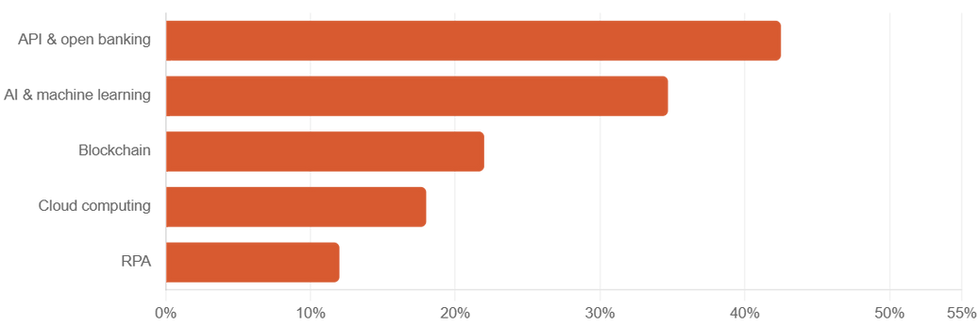
Modern fintech products rarely operate alone. They depend on external services for banking connectivity, identity checks, payments, notifications, ledgers, CRM sync, and analytics. That means integrations are not just a technical detail. They are part of the product itself.
This is one reason custom software matters so much. The product has to handle data flow cleanly across multiple systems. That often requires middleware, event handling, fallback logic, and monitoring. When those pieces are weak, the customer experience becomes inconsistent. When they are designed well, the product feels seamless.
Key Benefits of Custom Development for Fintech Companies in UAE
The biggest benefit is control. A fintech business can shape the platform around its own product strategy instead of fitting into someone else’s template.
There is also a trust benefit. Custom systems make it easier to build secure workflows, better visibility, and stronger operational control. That matters in financial products where reliability is part of the brand.
Then there is the long-term value. A custom platform can evolve with the business. New modules, new APIs, new user journeys, and new markets become easier to support over time. That is why growing fintech firms often see custom software not as a cost centre, but as a business asset.
Challenges Fintech Companies Need to Plan For
Of course, custom software is not automatically easy. Fintech teams still have to balance speed, security, integrations, and product quality. Choosing the wrong stack can create problems later. Poorly managed APIs can slow down onboarding or payments. Weak admin design can frustrate internal teams even if the front end looks polished.
The answer is not to avoid custom development. It is to approach it with a clear roadmap, strong architecture, and a realistic understanding of both the business and compliance context.

How to Choose the Right Development Partner
For UAE fintech products, the right partner should understand more than coding. They should understand financial workflows, sensitive data handling, integration-heavy systems, and product scalability.
That includes experience with fintech platforms, mobile and web user journeys, admin systems, cloud architecture, and long-term support. A strong partner should also understand how to connect product design with business goals, because a fintech platform has to work not just for end users, but also for operations, compliance, and growth teams.
What the Future Looks Like for UAE Fintech Software
The direction is clear. The UAE is continuing to invest in digital infrastructure and fintech-friendly business growth. Official government strategy continues to emphasize digital transformation, while innovation hubs like DIFC are expanding their fintech base and positioning Dubai among global fintech centres.
That means custom fintech software will likely become even more important in the next few years. As products become more connected, more intelligent, and more user-focused, fintech companies will need systems that are secure, adaptable, and built for their exact market position.
Conclusion
The rise of Fintech Companies in UAE is closely tied to how well they build. In a fast-moving market like the UAE, generic software can only take a company so far. Real growth usually requires custom systems that match the product, support integrations, protect user data, and make everyday operations smoother.
For founders, product teams, and financial innovators, the message is simple: custom software development is no longer just a technical choice. It is a business decision that shapes how your fintech product performs, scales, and earns trust in the market.
FAQs
Why do fintech companies in UAE need custom software development?
Because financial products often need tailored workflows, stronger security, deeper integrations, and better user experiences than generic software can provide.
What types of fintech software are most in demand in the UAE?
Digital banking platforms, payments systems, lending tools, wealth platforms, insurance solutions, and back-office operations software are all in demand.
Is custom fintech software better than off-the-shelf tools?
For serious fintech businesses, custom software is often better because it gives more control, flexibility, and room for long-term growth.
How important are API integrations in fintech development?
They are essential. Most fintech products depend on external systems for identity, payments, banking connectivity, data sync, and communication workflows.
What security features should fintech software include?
Secure authentication, permissions, monitoring, audit trails, encryption, and admin controls are all important parts of a reliable fintech product.
How do you choose the right fintech software development company?
Look for a partner with fintech experience, strong product thinking, integration capability, secure architecture skills, and long-term support mindset.


